What the calculator includes
The example is a 12 × 16-foot patio (192 square feet). At 2 inches deep, the loose pea gravel surface needs 32 cubic feet = 1.19 cubic yards. At the assumed 1.35 US short tons per cubic yard, that is about 1.60 tons. By package volume, it is 64 bags labeled 0.5 cubic foot. A bag labeled 50 pounds is a weight measure and may hold a different volume.
Pea gravel surface
Area (ft²) × top depth (in) ÷ 12 ÷ 27 = cubic yards
Crushed-stone base order
Area (ft²) × finished base depth (in) ÷ 12 ÷ 27 × 1.20 = loose cubic yards
The same footprint at 4 inches of finished base needs 2.37 cubic yards after compaction. The 20% order allowance raises that to 2.84 loose cubic yards, or about 4.12 US short tons at the assumed 1.45 tons per loose cubic yard. The allowance is a planning factor, not a measured compaction rate for every quarry product. Ask the yard for both loose bulk densities and expected compacted yield, then adjust the weight fields above. For another material alone, use the crusher run calculator or pea gravel cubic yard calculator.
The fabric line budgets one layer at the patio footprint plus 10% for cuts and overlaps; roll width and seam layout may require more. The edging line adds 5% or 10% to the perimeter. In area mode, enter a measured exposed perimeter for curves or walls; otherwise the tool estimates the perimeter of a square with the same area.
Patio sizes at the default depths
These figures use 2 inches of pea gravel, 4 inches of finished crushed base, 20% extra loose base volume, the stated densities and 5% extra edging. They include no extra top-layer waste. Round a bulk order to your supplier’s selling increment.
| Patio Size | Area (Sq Ft) | Pea Gravel (Tons) | 0.5-ft³ Bags | Base Order (Tons) | Edging (Ft) |
|---|---|---|---|---|---|
| 10 × 10 ft | 100 sq ft | 0.83 tons | 34 bags | 2.15 tons | 42 ft |
| 12 × 12 ft | 144 sq ft | 1.20 tons | 48 bags | 3.09 tons | 51 ft |
| 12 × 16 ft | 192 sq ft | 1.60 tons | 64 bags | 4.12 tons | 59 ft |
| 15 × 20 ft | 300 sq ft | 2.50 tons | 100 bags | 6.44 tons | 74 ft |
| 20 × 20 ft | 400 sq ft | 3.33 tons | 134 bags | 8.59 tons | 84 ft |
Plan the patio from the ground up
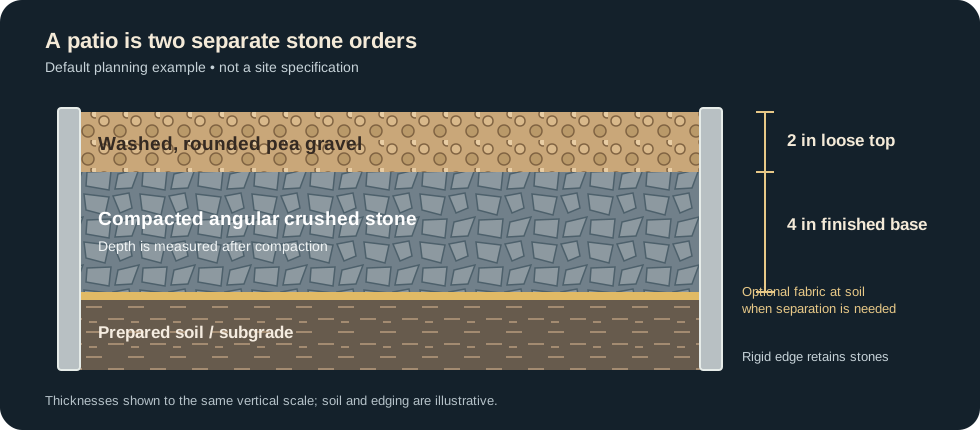
A shallow top layer still moves under narrow furniture legs. The base supports the area; edging contains the rounded stone. On clay, soft fill or a site with water collecting near the house, solve the drainage and subgrade problem before adding gravel. A loose stone top does not make a dense base below it freely draining.
Set the finished height
Mark the full seating footprint and where water can leave it. The default 4-inch base plus 2-inch top means roughly 6 inches of total layer thickness below the intended finish. Remove sod and organic soil, then compact the prepared subgrade. Keep runoff directed away from the building.
Choose any separator for its job
If fine or soft soil may mix with the base, lay a suitable permeable geotextile over the subgrade, with seams overlapped according to its manufacturer. Fabric is a separator, not a lasting cure for weeds seeded in surface debris. The calculator budgets one layer.
Build a firm, graded base
Spread compactable angular aggregate in manageable lifts and compact each with suitable equipment. Check finished depth and grade before the top stone arrives. Base depth depends on soil, use and climate; a thicker layer alone will not repair trapped water.
Contain and spread the finish
Install the chosen edging as its manufacturer directs, allowing it to contain the finished stone without becoming a trip edge. Spread washed pea gravel evenly to the selected depth. Rake after settling; try the actual chairs before deciding whether a firmer seating pad is needed.
Where pea gravel works, and where it frustrates
Pea gravel suits a relaxed garden seating nook where the soft, shifting texture is part of the appeal. It is less convenient under thin chair legs, on frequently used dining routes and wherever wheels need a firm surface. A small paver landing beneath a table can solve furniture wobble while keeping gravel around it; for a continuous accessible route, choose a stable surface throughout.
Plan on occasional leaf removal, hand weeding and raking. Windblown soil can collect between stones and grow weeds even over fabric. Where runoff repeatedly carries stones away, revisit grading and drainage rather than just adding more gravel. The weed guide, slope guide and angular versus rounded stone guide cover those decisions in more detail.
Frequently Asked Questions About Pea Gravel Patios
How much pea gravel and base do I need for a 12 × 16-foot patio?
At the default 2-inch top layer and 4-inch finished base, a 192-square-foot patio needs 1.19 cubic yards of pea gravel (about 1.60 US short tons or 64 bags labeled 0.5 cubic foot). The base needs 2.37 cubic yards at finished depth, or 2.84 loose cubic yards with this calculator’s 20% order allowance (about 4.12 US short tons at its assumed density). Confirm bulk weights with your supplier.
Why use a crushed-stone base under pea gravel?
Angular crushed aggregate compacts into a firmer support layer; rounded pea gravel remains mobile even when tamped. A base and contained, modest top layer usually make a seating area easier to use. Four inches is this calculator’s starting assumption, not a site specification: soft soil, freeze–thaw, drainage and anticipated loads can change the design.
Does a pea gravel patio need edging?
Yes, a firm border helps keep rounded stones out of lawn and paths. Steel, aluminum, timber, stone or pavers can work when installed for the site. Measure only exposed edges: a wall or existing curb may already contain one side. For an irregular shape, enter its measured perimeter rather than relying on the calculator’s square estimate.
Where should geotextile go, and will it stop weeds?
Where separation is needed on soft or fine soil, a permeable geotextile can go over the prepared subgrade, beneath the crushed base. Some designs also use a separator between stone layers; follow the product and site design. Fabric does not stop seeds from germinating in leaves and soil that collect on top, so surface cleaning still matters.
Will pea gravel support dining chairs or a wheelchair?
Narrow chair legs can sink or wobble because rounded stones roll. Broad furniture feet or a firm pad help, but loose pea gravel is still difficult for many mobility devices. For a reliably firm accessible route or dining surface, consider a properly built paver or other stable surface.
Method references: University of Maine Cooperative Extension on layered gravel patios and edging; Iowa State University Extension on compacted aggregate and drainage grade; Penn State Extension on geotextile separation of soil and aggregate. Their examples are not a site-specific patio specification.