Begin with the cause
For a few new seedlings: pull them before they set seed and lift out the debris around them. For grass or bindweed returning from the same spot: trace the root or runner to a bed edge, planting hole, or seam. For weeds across the whole bed: check how much soil and leaf litter has filled the rock before buying another barrier or spray.
Where is the weed actually rooted?
Rock beds get weeds from more than one direction. Seeds blow in and germinate in dust, leaf fragments, and soil caught between the stones. Perennial weeds can also grow from roots or runners already in the ground, especially through gaps at an edge or around a shrub. A fabric layer can separate stone from soil and suppress some weeds below, but it does not make the surface seed-proof. UC Integrated Pest Management describes both the value and limits of fabric under rock mulch; Cornell's gravel guidance calls out soil buildup and spreading weeds at edges.
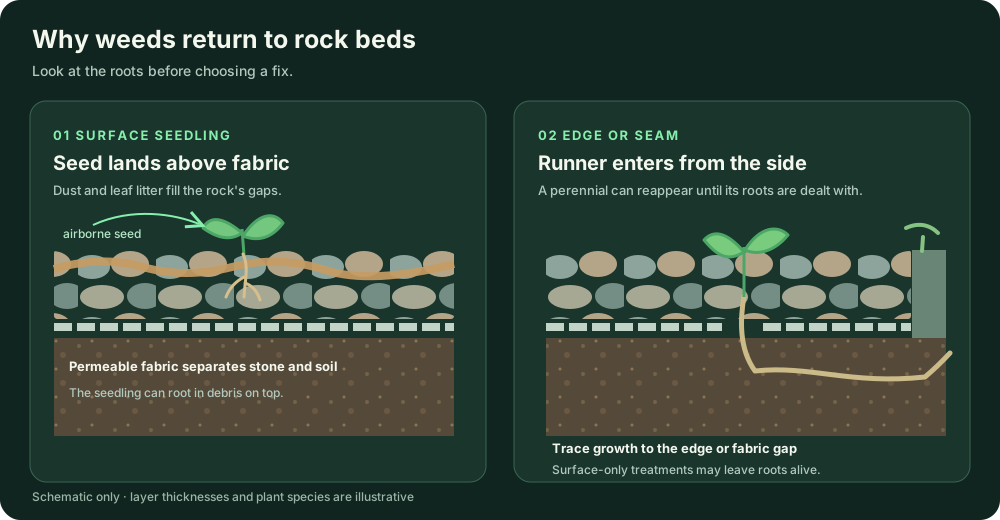
Check the surface
Lift a few stones. If the root sits in crumbly material above the fabric, remove the seedling and that material. A new sheet underneath will not remove the seed source on top.
Check below and beside it
Follow runners from nearby lawn or look for a planting cut, seam, or tear. Identify the plant before choosing a control: a surface treatment may only scorch the leaves of a perennial.
Check the stone layer
Part the rock in several places. If its gaps are full of soil, or soil is visible beneath thin coverage, the bed may need cleaning and a measured top-up.
Clear an existing rock bed without making more work
- 1
Pull or dig the weeds first
Work when roots are easier to release, before flowers turn to seed. Pull seedlings slowly at the crown. For a deep-rooted dandelion or spreading perennial, use a narrow weeding tool and remove as much root or runner as practical; expect follow-up where underground parts remain. Bag plants with seed heads. UC IPM recommends early hand removal and extra attention to perennial roots.
- 2
Take out the material weeds grow in
Rake loose leaves and needles off the stone. On a dry bed, a gentle leaf-blower pass can clear light debris; aim so you do not scatter pea gravel or blast soil onto plants. Where fines have packed between stones, scoop up and clean a small section rather than merely hiding the dirty layer under fresh rock. Cornell recommends regular raking to limit soil accumulation in gravel.
- 3
Close the easy entry points
Keep lawn grass from creeping over the edging and remove weeds along the outside edge. Check exposed fabric, open seams, and planting cuts. Tuck loose fabric back under stone if sound; replace a torn section only when the surrounding bed has also been cleaned. Do not cover living weeds and expect the new layer to kill established roots.
- 4
Return the rock to an even finished layer
Rake stone back so the underlying soil or fabric is covered. Match the depth to the actual stone size and use; the rock depth guide helps you check a small trial patch. Keep stone clear of plant stems and tree trunks.
What each weed control method can and cannot do
Start with the least disruptive method that fits the weed. No single pass prevents every future seed from landing in the rock. Products sold for lawns, vegetable gardens, bare ground, and ornamental beds have different permitted uses; the product label decides whether a particular rock bed and its nearby plants can be treated.
| Method | Useful when | Limit to know |
|---|---|---|
| Pulling or narrow-tool digging | There are scattered seedlings or individual deep-rooted weeds. | Missed perennial roots may resprout; return before new growth sets seed. |
| Raking and debris removal | Leaves, dirt, and lawn clippings collect in the stone. | Prevents some new rooting conditions; it does not kill weeds already established below. |
| Labeled preemergence herbicide | Annual seedlings recur after the bed is cleaned. | Prevents certain new seedlings; it will not kill existing weeds. Timing, watering, repeat use, nearby plants, and application rate depend on the exact label. |
| Labeled postemergence herbicide | A persistent weed is difficult to remove by hand. | Identify the weed and choose a product labeled for that site. Shield desirable plants and follow the label's drift, entry, and watering directions. |
| Flame or hot-water treatment | Small weeds are in an open, suitable gravel area. | Heat acts mainly on exposed growth and may need repeating. Open flame can ignite dry debris, fabric, edging, plants, or nearby structures; hot water can scald. |
Control limits: UC IPM landscape weeds guide, Cornell gravel guide, and EPA guidance on pesticide label directions.
Skip the vinegar, salt, and dish-soap recipe
Household vinegar is unreliable against established perennial roots; stronger horticultural vinegar can injure skin and eyes and can damage nearby plants. Salt can harm ornamental roots and move with runoff. A homemade mix has no tested site directions for your bed. If you choose a herbicide, use a registered product as labeled rather than improvising a mixture. Oregon State Extension explains vinegar's limits and hazards; University of Minnesota Extension explains salt damage to plants and water.
When cleaning is enough, and when to lift the rock
Stone is mostly clean and the layer is even
Remove weeds and debris, then maintain the edges. Replacing sound fabric or adding stone to a clean bed may add labor without addressing the real problem: new seeds arriving on top.
Soil has filled the gaps or fabric is exposed
Lift a manageable section, separate reusable rock from the accumulated fines, remove live weeds and roots, and repair the underlying layer if needed. Return clean stone at an even depth. If you need more, the rock calculator estimates cubic yards, approximate short tons, and 0.5-cu-ft bags from measured area and finished depth.
Fabric is a site choice, not a permanent weed cure. Under rock it can help keep stone and soil separate. It is less convenient where you expect to replant annuals, spread groundcovers, or work around dense roots. Use a permeable material appropriate to the site and maintain the rock above it. Read the installation guide before rebuilding a bed, and the sinking-rock guide if the main issue is stone mixing into wet soil. UC IPM describes these fabric tradeoffs.
A small routine beats another full reset
Lift leaves and clippings before they settle between stones. Check low spots where runoff deposits soil.
Pull them during a regular walk around the beds. Look at seams, planting holes, and the lawn edge.
Rake it level and measure the bare places. Top up only the area and depth that need coverage.
Before you buy another barrier or weed killer
Will landscape fabric stop all weeds in rock?
No. It can reduce weed emergence from below and keep soil and stone apart, but weeds can establish in material that later collects on top, through gaps, and at bed edges. Keep the upper rock layer clean and remove new seedlings early.
Can I just add more rock over the weeds?
Remove living weeds and trapped soil first. More stone may hide them briefly while leaving perennial roots and a seed-friendly layer in place. Check the finished depth before ordering so the bed remains suited to its plants and use.
Is a preemergent enough for a weedy bed?
No. Preemergence products target germinating seeds, not weeds already visible. Clean and remove existing growth first. If you choose a product, confirm that its label permits use in your specific bed and around its plants.
Are flame weeding or boiling water safe beside plants?
Both can damage desirable plants. A flame can ignite dry material and nearby structures; hot water can burn people and only gives limited suppression. For weeds close to shrubs, fabric, plastic edging, or a building, hand removal is usually the simpler choice.